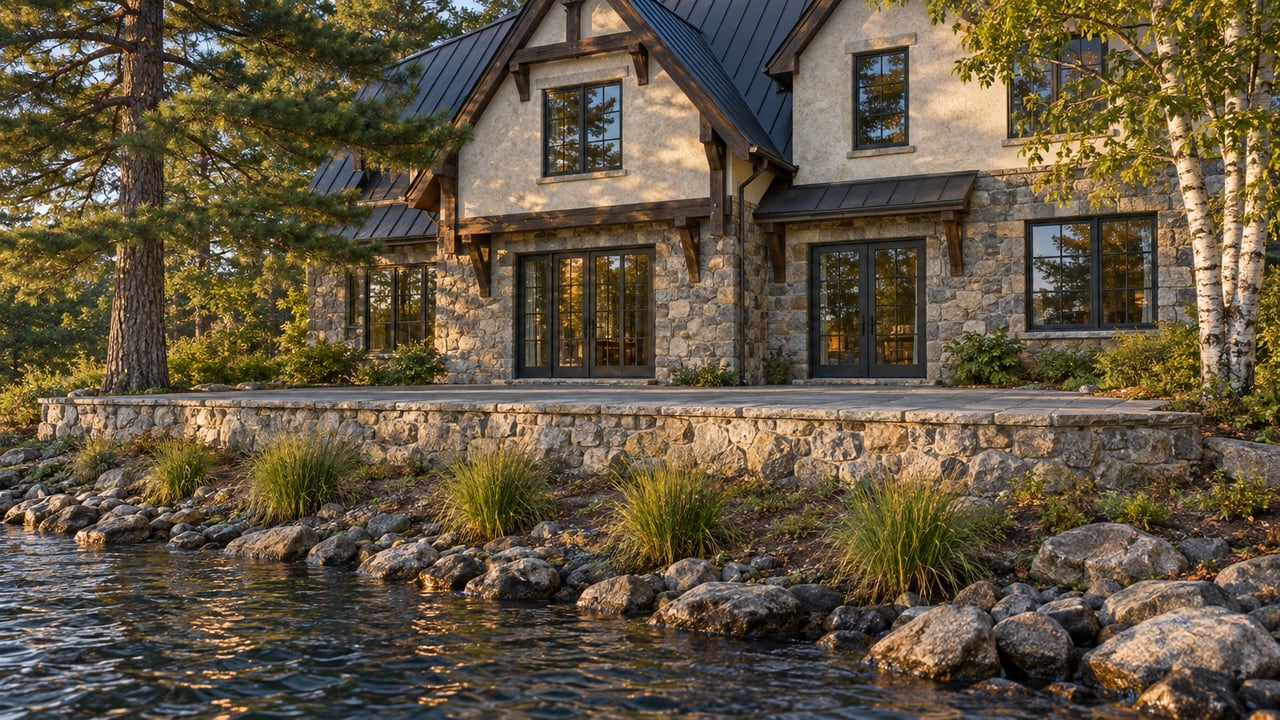
Traverse City Riparian Buffer Draft: What It Means for Waterfront Property
October 1, 2026
October 1, 2026
"This all helps to protect our property values and promotes public benefit," Traverse City's deputy planning director, Leslie Sickterman, told commissioners this June about a rule the city still hasn't finished writing. For a seller, that value question shows up first in the listing, where frontage footage may no longer match what a buyer can actually build on.
Traverse City has been drafting a riparian buffer ordinance since 2019. It is still not law. But if you own, are selling, or are underwriting a purchase along Grand Traverse Bay, Boardman Lake, the Boardman/Ottaway River, or Kids Creek inside city limits, the draft on the table right now already tells you more about your lot's future than the survey does.
Planning commissioners looked at the latest draft on June 2, 2026, ahead of a public hearing, as Traverse Ticker reported. It splits waterfront property into two zones. The outer Riparian Buffer Zone bars most new structures, buildings, and impervious surface. Inside that, a Critical Riparian Zone hugs the water's edge and adds a no-mow rule and a flat ban on private decks, no matter what the outer zone allows.
The distances aren't the same for every shoreline in the city.
| Frontage type | Riparian Buffer Zone (restricted building) | Critical Riparian Zone (no-mow, no deck) |
|---|---|---|
| Grand Traverse Bay and Boardman Lake | 50 feet from the ordinary high-water mark | First 10 feet from the ordinary high-water mark |
| Boardman/Ottaway River, Kids Creek, and other city waterways | 25 feet from the ordinary high-water mark | First 10 feet from the ordinary high-water mark |
Inside the outer zone, the draft also bans chemical fertilizer and pesticide, prohibits storing snow, and carries forward the city's existing rule against removing healthy trees. New landscaping in the buffer has to use native plants. Shoreline hardening, meaning private seawalls, bulkheads, and rubble, gets limited rather than banned outright. Decks, docks, walkways, public improvements, limited tree trimming, and a groomed beachfront are still allowed in the outer Buffer Zone, as long as the beachfront isn't sitting in a regulated shoreline wetland. None of that applies once you cross into the innermost 10 feet. There, the draft doesn't carve out an exception for decks. It just says no.
Traverse Ticker reported that an earlier version of this same draft, reviewed by planning staff back in 2022, set the Bay Shore and Boardman Lake buffer at 25 feet, the same as everywhere else in the city, with only Kids Creek and the lower stretch of the Boardman River held to a tighter 10-foot line. By the time commissioners reviewed the draft this June, Bay Shore and Boardman Lake frontage had been moved to a 50-foot buffer, double the original number.
That's the detail a listing sheet won't show you. The direction of travel on this ordinance hasn't been toward loosening restrictions as the process dragged on. It's been toward tightening them, specifically on the two waterfronts, Grand Traverse Bay and Boardman Lake, that carry some of the highest per-foot values in the city. If you're comparing a draft you found online from a few years ago to what's actually in front of commissioners now, you're comparing the wrong numbers.
City Commissioner and Planning Commissioner Mitch Treadwell said back in 2022 he was frustrated the ordinance had already taken as long as it had. It has now been in process since 2019. Planning Commission Chair Debbie Hershey said in January 2026 she's confident it will finally be completed this year, and the city's own 2026 goals document lists finishing the riparian ordinance as the "highest level priority for completion" on the Planning Commission's list, ahead of a public hearing, revisions, and final adoption. After that, the plan is to fold the finished ordinance into a full rewrite of the city's zoning code, which means these buffer lines won't stay a standalone policy. They become part of the base zoning text every future buyer's title search and site plan will reference.
A waterfront listing describes frontage in feet. It doesn't describe buildable feet. On Bay Shore or Boardman Lake property, once this ordinance clears its final vote, the first 50 feet back from the water carries real restrictions on new structures and impervious surface, and the innermost 10 feet of that rules out a private deck entirely, regardless of what the rest of the lot allows. A parcel marketed as "100 feet of Bay frontage" still has 100 feet of frontage; under the current draft, the first 50 feet back from the water has limited building rights, and plans may have room to move farther inland.
That gap matters most for the exact renovations waterfront buyers tend to plan first: a new or replaced seawall, a rebuilt dock system, an expanded patio or deck closer to the water, a lawn that runs to the shoreline instead of stopping at a planted buffer. Grand Traverse Bay and Boardman Lake sellers with an aging seawall or a deck built inside what would become the Critical Riparian Zone are sitting on improvements that a buyer may not be able to replace in kind once the ordinance is final. Traverse City home values ran well ahead of the rest of the state through the summer, with the median sale price across the city at $485,000 over the three months ending August 2026, up nearly 20 percent year over year, and downtown parcels along the Boardman corridor selling at a median of $515,000 over the three months ending July 2026. Those are exactly the addresses the buffer zone touches first.
Before you write an offer or price a listing along any of these four waterways, it's worth asking a few questions that a standard purchase agreement won't raise on its own.
When does this actually take effect? As of this June's review, the ordinance still needed a public hearing, further revisions, and a city commission vote before adoption, with the goal of finishing in 2026. There's no confirmed effective date yet, which is exactly why it belongs in the conversation now rather than after it's already law.
If you're weighing a purchase or a listing on Grand Traverse Bay, Boardman Lake, the Boardman/Ottaway River, or Kids Creek, the buffer line matters more than the frontage number on the flyer. Lobenherz Real Estate Group tracks this draft alongside every other piece of local land use that touches Traverse City waterfront value, and we're glad to walk through what it means for a specific parcel before you make a decision that outlasts the ordinance.
This article is general information, not legal, tax or financial advice. Consult a qualified professional about your situation.
Stay up to date on the latest real estate trends.
203 Bridge St Charlevoix MI 49720