How To Evaluate Acreage And Land Near East Jordan
April 2, 2026
April 2, 2026
Buying land near East Jordan can feel simple at first. A parcel may look flat enough, wooded enough, or private enough from the road, but the real story is usually in the soils, access, zoning, and environmental constraints. If you want to make a smart acreage purchase, you need to look past the listing photos and study what the land can actually support. Let’s dive in.
Near East Jordan, land conditions can change quickly from one parcel to the next. According to the City of East Jordan Master Plan, some areas have well-drained sandy and loamy soils that are generally more favorable for development, while areas around the Jordan River include poorly drained organic soils that are generally unsuitable for building sites and septic fields.
That matters because acreage value is tied to usability, not just size. Ten acres with buildable soils, manageable slope, and good access can be far more valuable than a larger parcel with drainage or wetland issues.
One of the first tools you should use is the USDA Web Soil Survey. The NRCS describes it as the standard public resource for current soil information, and it can help you review soil types, drainage characteristics, and other land interpretations for a specific parcel.
For buyers near East Jordan, this is especially useful because soil conditions are not uniform. A parcel that looks buildable from the road may still have drainage limitations, septic concerns, or other issues that affect your plans.
A soil check can help you understand:
This is not a substitute for formal inspections or permits, but it is a strong early filter before you spend time and money moving forward.
Topography is a major factor in this area. East Jordan sits within a glacially shaped landscape, and land near the city can slope toward the Jordan River valley and Lake Charlevoix. That can affect driveway design, building placement, stormwater flow, and construction cost.
The city’s site plan review checklist specifically calls for topography, elevations, floodplain elevations where relevant, wetlands location, stormwater drainage, and natural features such as woodlots and shorelands. That tells you these are not minor details. They are part of basic feasibility.
Charlevoix County has a significant wetland footprint. The county hazard mitigation data reports 67,349 acres of wetlands and 172,200 acres of forest land in the county, which makes environmental review especially important for many rural parcels.
If a property is near the Jordan River corridor, lake edges, or low-lying ground, you should be extra careful. Wetlands, floodplain conditions, and drainage constraints can limit where you build and what improvements are allowed.
A parcel can have acreage and still have an access problem. One of the biggest mistakes land buyers make is assuming that because they can physically reach a parcel, they have the legal rights they need.
The East Jordan site plan checklist requires identification of public and private easements, utility lines, rights-of-way, and recorded streets that intersect the parcel. In other words, legal access is a core value driver.
Before you buy, review deed records through the Charlevoix County Register of Deeds. This is where you can confirm recorded easements, covenants, and ownership history.
You should also remember that road access and legal access are not always the same thing. A parcel may have recorded access rights, but the actual road or driveway conditions could still create challenges.
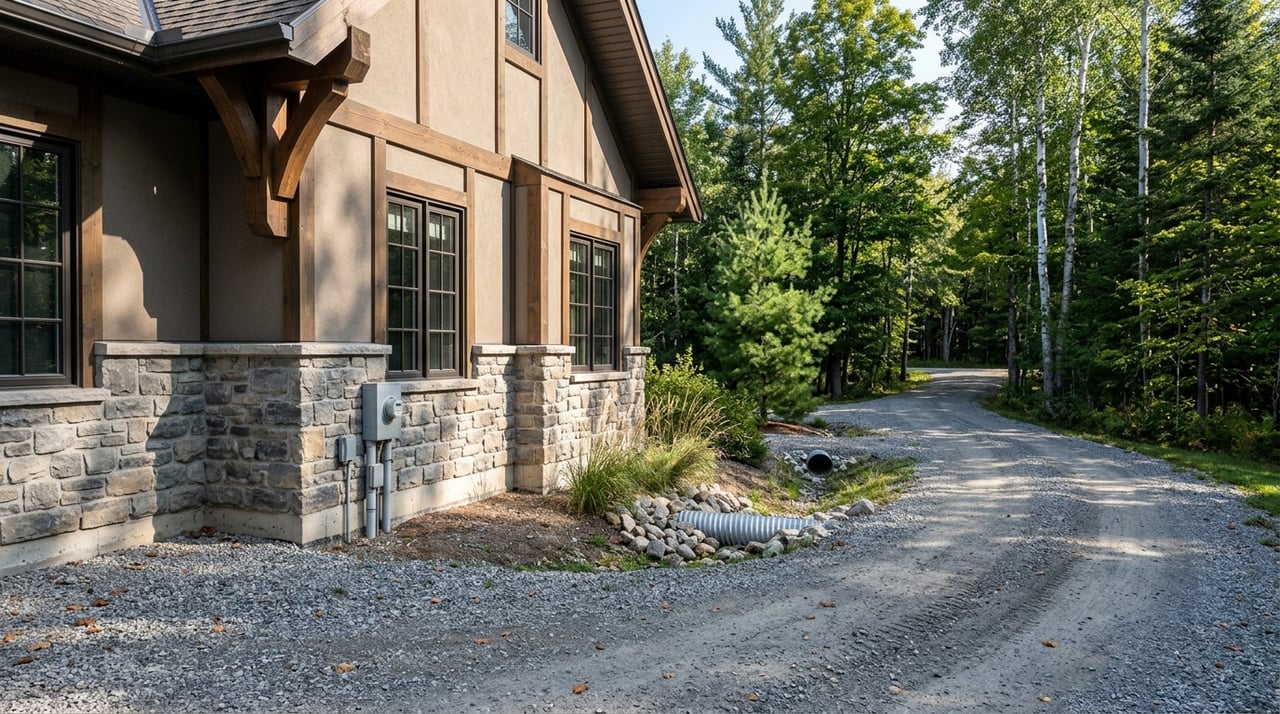
Charlevoix County’s building requirements note that applicants should contact the Charlevoix County Road Commission about driveway culverts. The county hazard mitigation plan also notes that many rural homes are on unimproved roads or long, narrow private driveways, which can create issues for emergency access and fire trucks.
That means your due diligence should include more than a title review. You should also ask practical questions about driveway layout, culvert needs, seasonal access, and how service vehicles can reach the site.
Utilities often make or break a land purchase. Near East Jordan, some parcels may have access to city sewer and water, while others depend on private wells and on-site septic systems.
The city’s site plan checklist distinguishes between municipal services and private well or septic alternatives. It also notes that septic and well options require separate City and Health Department permits.
Ask these questions early:
If your intended build depends on private systems, the land needs to support those systems physically and legally.
One of the most important steps is confirming which local government controls the parcel. You should never assume that land near East Jordan follows the same rules just because it shares a mailing area or sits close to town.
The Michigan Zoning Database is designed to help you identify which level of government has zoning authority and where to find the applicable ordinance. This is especially important if you are comparing parcels inside the city with parcels in nearby township areas.
Inside East Jordan, the city site plan checklist lists multiple zoning districts and states that individual single-family homes and mobile or manufactured homes on separate lots or parcels in residential districts do not require site plan approval, though other permits may still apply.
In South Arm Township, the zoning ordinance includes different districts and dimensional standards. For example, the ordinance shows that R-1 single-family lots require one-half acre and 100 feet of width, while A-1 agricultural lots require 2 acres and 200 feet of width.
That is why parcel-by-parcel verification matters. A lot that looks large enough on paper may still fall short on frontage, width, setbacks, or district-specific rules.
If the parcel is near the Jordan River corridor, there may be additional Natural River standards in play. South Arm Township’s ordinance notes that the NR district is regulated separately under Jordan River Natural River rules.
This is a good example of why map size alone does not tell you the whole story. A scenic parcel near water may be highly desirable, but it may also come with tighter development constraints.
The best acreage purchase is not always the biggest or the prettiest. It is the parcel that best supports what you want to do.
For homebuilding, the most valuable parcels usually combine favorable soils, manageable slope, legal access, and a workable utility path. East Jordan’s development checklist makes that clear by requiring review of soils, topography, floodplain conditions, wetlands, and access rights.
If any one of those factors is weak, your building costs or approval timeline may change significantly.
Recreational acreage can be attractive for trails, privacy, and outdoor use. In Charlevoix County, that appeal is often tied to forested settings, wetlands, and natural features.
At the same time, those same qualities can limit what can be built or altered. In many cases, recreation value is shaped as much by what should be preserved as by what can be developed.
For agricultural use, acreage count is only part of the picture. Drainage, tillable layout, and zoning all matter.
USDA 2022 agricultural statistics show 209 farms in Charlevoix County, with 23,947 acres in farms and 12,886 acres of cropland, which shows there is active farm use in the county. But because so much local land is forested or wet, productive well-drained ground is more limited and may carry stronger value than marginal acreage.
Some buyers focus only on the purchase and forget that the approval process can widen once site work begins. If grading, clearing, or earthwork is part of your plan, permit requirements may expand quickly.
According to Charlevoix County’s building requirements, a soil erosion permit is needed for work within 500 feet of a lake or stream or for disturbing more than one acre of earth. The same county guidance also points buyers to wetlands review when wetlands are present.
This is a key cost and timeline issue. Even if the parcel is attractive and generally usable, improvement plans may require more coordination than expected.
When you evaluate acreage near East Jordan, try to avoid these common errors:
In this market, details drive value. The strongest land purchases usually happen when you verify the physical, legal, and zoning realities before you commit.
If you are considering land near East Jordan, it helps to think in layers. Start with the parcel’s physical conditions, then move to access, utilities, and zoning. After that, compare all of those findings to your intended use and expected budget.
That process gives you a clearer picture of both opportunity and risk. Whether you are looking for a future homesite, recreational retreat, or long-term land investment, careful due diligence can help you protect your options and make a more confident decision.
If you want experienced guidance on evaluating acreage, positioning a land sale, or understanding how a parcel may fit your goals in Northern Michigan, connect with Lobenherz Real Estate Group. Their team brings a high-touch, strategic approach to land and luxury property decisions across the region.
Stay up to date on the latest real estate trends.
203 Bridge St Charlevoix MI 49720