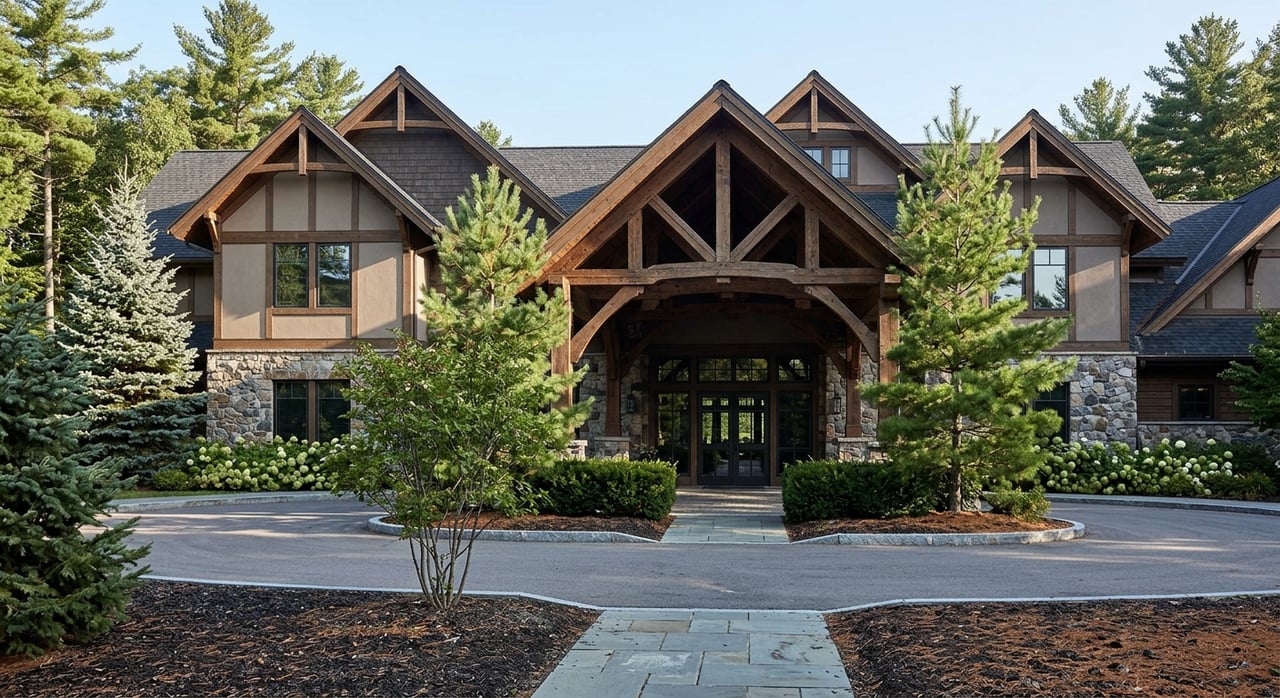
Grand Traverse Resort Hotel Sales: What Investors Need
April 23, 2026
April 23, 2026
If you own a resort or hospitality property near Traverse City, selling it is not just about listing real estate. You are selling an operating business in a market where timing, financial clarity, and seasonal performance can shape buyer confidence. The good news is that Grand Traverse County and nearby Leelanau County give you a strong tourism-driven backdrop, and with the right preparation, you can present your asset in a way serious investors understand. Let’s dive in.
In the greater Traverse City region, lodging demand is deeply tied to tourism. Traverse City Tourism identifies the area as a four-season destination, and the local visitor economy plays a major role in regional business activity.
That scale matters to investors. According to a regional economic impact study, the Greater Grand Traverse visitor economy generated $1.4 billion in total economic impact in 2022, with $1.0 billion in direct visitor spending. Lodging accounted for 41% of that spending, which tells buyers that accommodations are central to the local economy.
For resort owners, the bigger story is seasonality. Networks Northwest reports that northwest Michigan’s main tourist season generally runs from Memorial Day to Labor Day, with Grand Traverse County population rising from 109,408 in February to 161,088 in July. In nearby Leelanau County, total population rises from 26,630 in January to 60,094 in July, reinforcing how much summer demand can influence operating results.
Hospitality investors do not value a resort the same way they value a typical commercial building. According to HVS hotel valuation guidance, buyers and appraisers usually consider the income approach, sales comparison approach, and cost approach, but the income approach is generally the most persuasive for lodging assets.
In simple terms, buyers want to know how well the property performs and how dependable that performance is. They will study current income, expense patterns, and whether the business can sustain or improve future cash flow. That is why a clean operational story often matters more than a polished marketing pitch.
HVS also explains that buyers may use several income-based tools, including cap rate analysis, discounted cash flow, and the room revenue multiplier, depending on the asset and its income profile. Older or more distinctive resorts often require extra adjustments for age, location, renovation history, and operating changes, which is especially relevant in seasonal Northern Michigan markets.
If you want investors to take your resort seriously, you need to show quality of earnings. That means your trailing 12 months should be organized, understandable, and supported by records a buyer can trust.
According to HVS transaction advice for owners, institutional buyers often underwrite to in-place NOI and a defensible trailing-12-month story, not an overly optimistic projection. If your numbers rely on best-case assumptions, buyers may discount value or retrade later.
Before going to market, you should be able to explain the operating metrics buyers expect to see. These are not just industry buzzwords. They are the language investors use to compare one opportunity against another.
STR’s reporting guidelines define the most important hotel KPIs as:
These metrics help buyers look past top-line revenue alone. A resort with strong occupancy but weak rate quality may not be as attractive as one with better ADR and stronger profit flow-through.
It is easy to focus on filling rooms, especially in a seasonal market. But occupancy by itself does not tell the whole story.
The research cited in your market report notes that ADR is often a stronger predictor of bottom-line profitability than occupancy alone. For sellers, that means you should be ready to show not just that guests came, but that your pricing strategy supported healthy revenue and profit performance.
A strong resort sale package should make it easy for a buyer to underwrite the property without guessing. The more complete and orderly your information is, the easier it is for a qualified buyer to move forward with confidence.
HVS notes that deep due diligence is now standard, and surprises after the letter of intent are a common reason deals lose momentum. For that reason, your data room should be assembled before the property officially goes to market.
Start with the core financial package:
This is the foundation of your value story. If buyers cannot quickly understand your income and expenses, they will either slow down or build extra risk into their pricing.
According to HVS guidance on hotel operational records, buyers will also expect records that show the asset is transfer-ready. These often include:
This kind of preparation reduces uncertainty. It also signals that the property has been managed with care and can transition more smoothly after closing.
For resorts, physical condition is part of the investment case. A buyer is not just purchasing current income. They are also buying future repair needs, renovation timing, and possible operational disruptions.
HVS notes that property improvement plans, renovation needs, and deferred capital items have become major transaction levers. If buyers discover hidden repair needs late in due diligence, they may lower their offer or ask for concessions.
Before listing, it helps to prepare:
You do not need a perfect property to sell well. You do need a credible, transparent picture of condition and near-term capital needs.
In a market shaped by summer travel, timing can influence how your numbers are perceived. That does not mean every resort should launch on the same date, but it does mean your listing strategy should reflect the region’s operating cycle.
Networks Northwest shows that occupancy peaks in July, reaching 72.9% in Grand Traverse County and 65.3% in Leelanau County. Traverse City Tourism’s event calendar also highlights summer demand drivers like the National Cherry Festival, scheduled for July 4–11, 2026.
A practical takeaway is that many owners may benefit from preparing the asset during the high season and launching just after peak summer performance is visible in the trailing numbers. That approach can help you present the strongest recent revenue story while avoiding the challenge of marketing a highly seasonal asset during a weaker operating stretch.
Not every buyer is the right buyer for a Northern Michigan resort. In this segment, serious prospects are often experienced hospitality investors, regional owner-operators, private capital groups, or private-wealth buyers who understand operating businesses.
According to the CBRE 2025 U.S. Hotel Investor Intentions Survey, 94% of surveyed investors expected to maintain or increase hotel investment in 2025, 77% were targeting value-add or opportunistic deals, and 33% identified resort locations as attractive. That suggests buyer interest exists, but it is selective and typically focused on assets with a clear path to stable or improved performance.
This is why investor-targeted marketing matters. Your outreach, pricing strategy, and offering package should speak to operational upside, real cash flow, and transition readiness, not just the beauty of the setting.
When you step back, the sale of a Grand Traverse County or nearby Leelanau resort comes down to a few core ideas. Buyers need confidence in your income, clarity on seasonality, and a realistic view of capital needs.
A strong seller preparation plan usually includes:
If you are preparing to sell a resort, inn, boutique hotel, or hospitality property in Northern Michigan, working with an advisor who understands both real estate marketing and hospitality underwriting can make a meaningful difference. To discuss pricing, buyer positioning, and sale strategy, connect with Lobenherz Real Estate Group.
Stay up to date on the latest real estate trends.






203 Bridge St Charlevoix MI 49720