Petoskey Historic Homes Architecture and Distinctive Styles
June 25, 2026
June 25, 2026
If you are drawn to Petoskey waterfront homes, you are not just shopping for square footage or views. You are stepping into a place where architecture, shoreline setting, and historic character all shape how a home looks, feels, and holds appeal over time. Whether you are buying, selling, or simply comparing styles in the 49770 area, this guide will help you understand the home types that define Petoskey and what they can mean for ownership and value. Let’s dive in.
Petoskey’s identity is closely tied to Little Traverse Bay and its role as a regional hub for nearby resort communities like Bay Harbor, Bay View, Harbor Springs, and Walloon Lake. The city also has eight miles of Lake Michigan shoreline, which helps explain why waterfront and water-oriented design play such a big role in the local housing story.
Architecture matters here because buyers are often choosing between very different experiences. In one part of the market, you may find historic homes with original details and a strong sense of place. In another, you may see newer waterfront construction designed around views, amenities, and lower-maintenance living.
Petoskey’s master plan identifies the Downtown and East Mitchell areas as historic districts. These districts reflect the city’s growth from the late 1800s through World War II, when Petoskey developed as both a business center and a tourist destination.
Downtown Petoskey’s historic district includes portions of ten irregularly shaped blocks in the central business district, bounded by US-31, Petoskey Street, East Mitchell Street, and Division Street. The primary styles named in the National Register listing are Classical Revival, Italianate, and Queen Anne.
For residential buyers and sellers, East Mitchell Street is especially useful as a local style reference point. Homes there are described as mostly frame construction and typically range from 1.5 to 2.5 stories, with architectural influences spanning the late 19th century through the interwar years.
Queen Anne is one of the key styles tied to Petoskey’s historic identity. In practical terms, these homes often stand out because they feel expressive and layered compared with simpler designs.
For buyers, the appeal is often the sense of craftsmanship and personality. For sellers, condition and architectural integrity can make a major difference, especially when original materials and proportions have been preserved.
The East Mitchell Street Historic District includes Victorian homes that reflect Petoskey’s late 19th-century growth. These houses are part of what gives the area its historic texture and visual variety.
When you tour a Victorian home in Petoskey, you are often looking at more than age alone. You are looking at how well the home still fits its original scale, massing, and setting, all of which contribute to its lasting appeal.
Shingle Style and Colonial Revival homes add another layer to Petoskey’s historic housing mix. These styles help bridge the transition from ornate late-1800s design into the more restrained forms that became popular in the early 20th century.
For buyers who want historic character without every feature feeling highly decorative, these homes can offer a balanced option. For owners preparing to sell, thoughtful maintenance and compatibility with original design matter more than trend-driven updates.
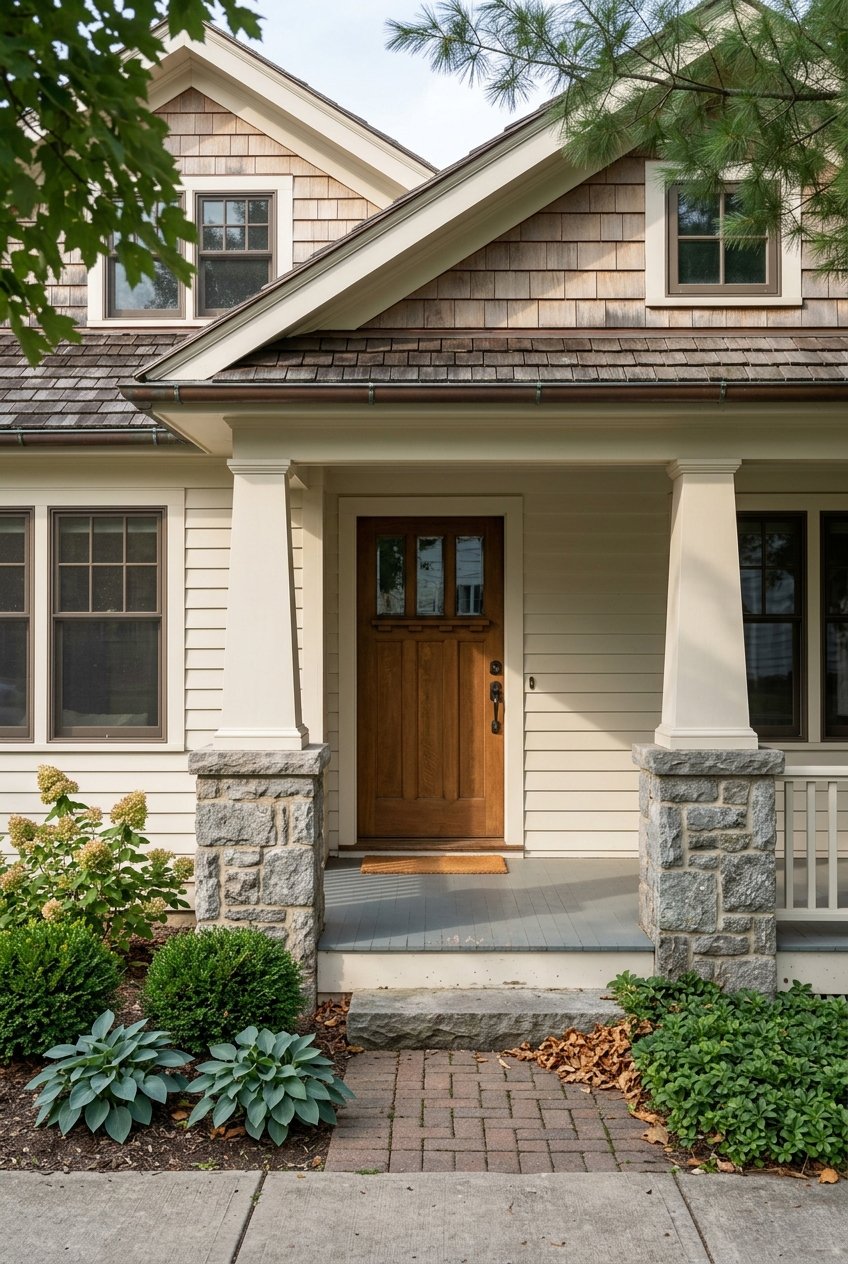
Petoskey’s East Mitchell area also includes bungalow-era homes and period small houses that may show Craftsman influence. These homes are often tied to the early 20th century and bring a more modest, practical scale to the local historic mix.
That smaller footprint can be part of the appeal. Buyers often respond to homes that feel manageable, efficient, and architecturally grounded, especially when the original form and materials have been respected.
Just next to Petoskey, Bay View offers one of the strongest local examples of a cottage-centered historic landscape. Established in 1875 and designated a National Historic Landmark, Bay View contains more than 430 cottages on terraced land descending to Little Traverse Bay.
Rather than one rigid architectural style, Bay View is best understood as a cohesive cottage environment. The homes are mostly late Victorian or early 20th-century wood-frame cottages set relatively close together on small plots, creating a distinct resort-oriented pattern.
If you hear the phrase cottage vernacular in this market, Bay View is the clearest local example. That phrase works best as a descriptive shorthand for modest, historic, wood-frame resort homes that read as a connected community rather than a formal single-style subdivision.
If Bay View represents historic cottage living, Bay Harbor shows the newer side of shoreline design. The community includes year-round and seasonal living options such as luxury homes, building sites, condos, and yacht docks across five miles of Lake Michigan shoreline.
This creates a useful contrast for buyers comparing lifestyle priorities. Historic Petoskey-area homes may offer charm, craftsmanship, and a strong connection to place, while newer shoreline properties may appeal through modern design, lakeside access, and amenity-driven living.
Neither is automatically better. The right fit depends on whether you value architectural history, renovation potential, and original detail, or a more current floor plan and lower-maintenance ownership experience.
In Petoskey, preservation is not only about appearance. The city’s downtown design guidelines state that good maintenance saves money over time, while poor maintenance can shorten a building’s useful life and reduce value.
That matters if you are buying an older home or preparing one for market. A well-kept historic property can stand out for all the right reasons, while deferred maintenance may affect both enjoyment and buyer perception.
Petoskey’s design guidance emphasizes retaining original windows when possible and repairing masonry and terra cotta carefully. It also calls for new work to remain compatible with older buildings in size, scale, proportion, and massing.
For sellers, this means architectural details are not just cosmetic. Buyers who are drawn to historic homes often notice whether updates feel respectful to the structure or whether they compete with the home’s original character.
A useful distinction in this market is that National Register listing is mostly honorary, while local historic districts are generally the mechanism that review major exterior alterations. In other words, a home’s historic reputation and the actual review rules affecting changes are not always the same thing.
That is especially important before starting renovations. If you are considering exterior work on a property in a historic area or private community, it is wise to understand the review process early.
Bay View’s building certificate process is especially hands-on. Approval is required before exterior work begins, and owners are asked to submit detailed materials and drawings.
The building packet also states that vinyl or aluminum-clad windows or doors, vinyl or aluminum siding, metal roofs, and composite trim are not generally approved. For buyers, that affects future project planning. For sellers, it can help explain why preserved materials and approved improvements carry weight.
The safest way to think about value in Petoskey is this: condition, setting, and architectural integrity all matter. A historic home may draw strong interest because of its design and sense of place, while a newer waterfront property may appeal through convenience, views, and amenities.
Michigan SHPO found that historic district samples in five Michigan communities generally had greater total appreciation than nearby non-designated comparison areas, with values often similar or better on a per-square-foot basis. That does not guarantee future performance for any one property, but it does support the idea that preservation and intact character can matter in the market.
Petoskey’s planning and preservation documents also connect long-term community character to intact materials, compatible design, and human-scale development. In practical terms, buyers are often paying attention to whether a home feels authentic to its setting, not just whether it has been updated.
If you are shopping for a historic or waterfront home in Petoskey, focus on the relationship between style and ownership demands. A beautiful house can be a smart fit, but only if its maintenance needs, review standards, and long-term use align with your goals.
A few practical things to evaluate include:
If you are selling a Petoskey-area historic or waterfront home, your strategy should go beyond basic features. Design-minded buyers are often responding to the story of the property as much as the room count.
That means it helps to present the home through the lens of architecture, setting, and stewardship. Original materials, thoughtful updates, preserved proportions, and a strong waterfront or historic setting can all strengthen how your property is understood in the market.
For higher-value properties, this is where polished presentation and disciplined positioning matter. Buyers in Northern Michigan’s resort and second-home market often make emotional decisions first, then validate them with logic, condition, and long-term potential.
Petoskey’s waterfront architecture and historic home styles offer something rare: meaningful variety within a highly recognizable sense of place. If you are weighing a purchase, preparing to sell, or trying to understand how architectural character influences market appeal, a focused strategy can help you make the most of the opportunity.
If you want expert guidance on positioning a historic home, waterfront property, or luxury listing in Northern Michigan, Lobenherz Real Estate Group can help you build a smart strategy from the start.
Stay up to date on the latest real estate trends.
203 Bridge St Charlevoix MI 49720